
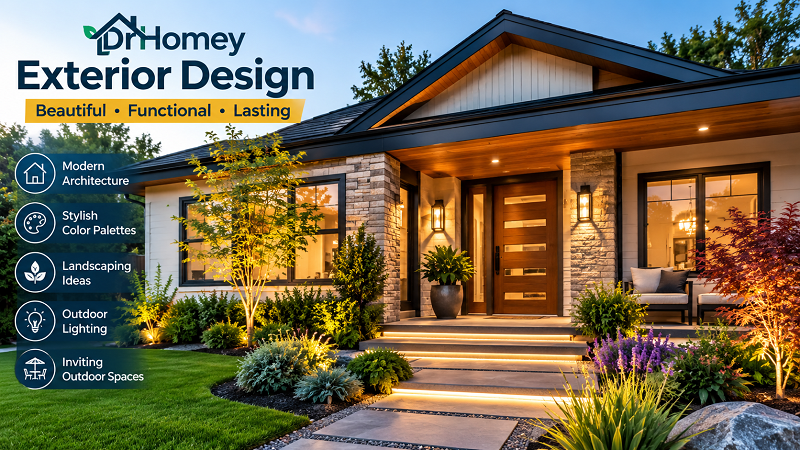
A home’s exterior does more than create curb appeal. It protects the structure, guides how people approach the property, and shapes how outdoor spaces are used. If you searched for DrHomey exterior design, you may be looking for ideas that combine appearance with everyday function.
The term appears across DrHomey’s exterior-design content, where the focus includes architecture, materials, color, landscaping, lighting, and outdoor living. However, it is important to clarify one point. DrHomey exterior design is not presented by authoritative architectural bodies as a formal architectural style. It is better understood as a practical design approach associated with DrHomey’s home-design content.
That distinction helps you use the ideas without treating a branded phrase as an established design movement.
What Is DrHomey Exterior Design?
DrHomey exterior design focuses on making the outside of a home attractive, comfortable, and practical.
The approach commonly brings several elements together:
- Exterior architecture
- Paint and color choices
- Siding and other materials
- Landscaping
- Pathways and hardscaping
- Outdoor lighting
- Porches and patios
- Outdoor furniture
- Maintenance and durability
Drhomey’s own exterior design material emphasizes a balance between visual appeal and practical use. Its recent guide also highlights durability, climate suitability, maintenance, lighting, and landscaping. The useful lesson is simple. Do not choose exterior features separately.
A beautiful door can look disconnected if the landscaping, lighting, roofline, and exterior colors compete with it. A better result comes from making the major elements work together.
Is DrHomey Exterior Design a Formal Architectural Style?
No clear evidence shows that DrHomey exterior design is a recognized architectural style like Colonial, Craftsman, Mid-Century Modern, or Victorian. The phrase is mainly used online to describe an exterior-design philosophy associated with DrHomey content.
That distinction matters because some pages describe it as though it were a formal design movement. The available DrHomey material instead presents exterior design as one part of a broader home-design platform. The site’s navigation includes Exterior Design, Interior Design, Handy Tips, Investments & Crypto, and Parenting.
So, if you are planning your own exterior, think of DrHomey as a design framework, not a fixed architectural template. That gives you more freedom.
Start With the Architecture of Your Home
Before changing colors or buying outdoor furniture, study the structure you already have. Look at the roof shape, windows, doors, porch, garage, siding, brick, stone, and overall proportions. A modern house may benefit from simple lines and restrained materials.An older home may look better when its original architectural details remain visible.
This principle also appears in discussions among homeowners and architects. In recent exterior design discussions, people often recommend working with a home’s existing character rather than modernizing it without considering the original design.
The goal is not to make every house look modern. The goal is to make the existing architecture look intentional.
Choose an Exterior Color Palette
Color can change the entire impression of a home. A practical starting point is to select one dominant exterior color, one supporting color, and a smaller accent. For example, you might use:
Warm neutral: main walls
Dark charcoal: trim and selected architectural details
Deep green: front door or planting accents
You can also work with the colors already present in permanent materials. Brick, stone, roofing, and masonry are harder to change than paint. Your paint choices should therefore complement those materials. Exterior design discussions also show how difficult color selection can be when homeowners try to coordinate siding, brick, trim, doors, and existing architectural features.
Test a paint color on a small section before committing to the entire exterior. Natural light can make the same color look very different throughout the day.
Use Materials for More Than Appearance
Exterior materials need to handle weather. That makes durability just as important as appearance. Drhomey’s current exterior guide recommends evaluating materials according to factors such as lifespan, maintenance, climate, moisture, and installation requirements.
Common exterior materials include:
| Material | Main advantage | Important consideration |
|---|---|---|
| Brick | Durable appearance | Higher upfront cost |
| Stone | Strong visual character | Installation can be expensive |
| Vinyl siding | Generally low maintenance | Quality varies |
| Fiber cement | Durable and versatile | Installation needs care |
| Wood | Natural appearance | Requires ongoing maintenance |
| Metal | Modern appearance | Can dent depending on product |
There is no single best material for every house.
Climate, budget, existing construction, maintenance expectations, and local building practices should influence the decision.
Make the Front Door the Visual Focus
The entrance is one of the easiest places to improve an exterior. You do not necessarily need a new door. Sometimes cleaning the existing entrance, updating hardware, improving lighting, and removing visual clutter can make a noticeable difference. A stronger entry sequence might include:
- A clearly visible walkway
- Balanced planting near the entrance
- A clean front door
- Suitable exterior lighting
- Simple house numbers
- A small amount of seasonal decoration
Avoid adding too many competing features. The entrance should guide the eye toward the door.
Treat Landscaping as Part of the Architecture
Landscaping should not be an afterthought. Plants can soften hard building lines, frame windows, define paths, and connect the house with its surroundings.
The U.S. Environmental Protection Agency recommends considering native or regionally appropriate plants because they are adapted to local conditions and can reduce water and maintenance demands once established.
The U.S. Department of Energy also recommends using landscaping strategically for shade, wind protection, and climate-specific performance.
That gives exterior design a practical dimension. A tree is not only decorative. Depending on its location and species, it can provide shade, influence outdoor comfort, and contribute to the overall landscape structure.
Keep Plants Away From Problem Areas
Beautiful landscaping can become a maintenance problem when it is placed too close to the building. The Department of Energy’s residential landscaping guidance recommends leaving space between mature plants and exterior walls. Think about mature size before planting.
A small shrub from the garden center can become much larger over several years. Avoid covering vents, blocking windows, restricting access to equipment, or making exterior inspection difficult. Good landscaping should improve the property without creating new maintenance problems.
Add Lighting With a Purpose
Exterior lighting should do more than make a house look attractive at night. Use it to improve visibility around entrances, steps, pathways, and frequently used outdoor areas. You can also use accent lighting to highlight architectural features or landscaping.
Drhomey’s exterior-design content emphasizes outdoor lighting as part of the relationship between architecture and the surrounding landscape. A simple lighting plan often works better than covering the entire property with bright fixtures. Think in layers:
Entry lighting: helps identify the entrance.
Path lighting: improves visibility along walkways.
Accent lighting: highlights selected architectural or landscape features.
Outdoor living lighting: supports patios, decks, and seating areas.
Design Outdoor Spaces for Real Life
A patio looks better when it also works well.
Before choosing furniture, decide how the space will be used.
Will you eat there?
Will children use it?
Do you want a quiet reading area?
Will you entertain guests?
Do you need shade?
The answers should determine the layout.
Drhomey’s exterior content repeatedly connects exterior design with outdoor living and the relationship between indoor and outdoor spaces. You do not need a huge backyard to apply this idea.A small patio can work well when furniture, lighting, planting, and circulation are planned together.
Think About Climate Before Choosing Features
Exterior design should respond to the local environment.A design that works well in a dry climate may not be suitable for a wet region.
Consider:
- Rainfall
- Humidity
- Snow
- Strong sunlight
- Wind
- Freeze-thaw conditions
- Local soil
- Water availability
The Department of Energy’s landscaping guidance provides different strategies for hot-arid, hot-humid, temperate, and cool regions. This is one of the most useful principles to take from exterior design. Do not copy a photograph without considering the conditions that produced it. A landscape that looks excellent online may require far more water or maintenance in your location.
Consider Native and Regionally Appropriate Plants
Plant selection can affect both appearance and maintenance.EPA guidance recommends choosing native or regionally appropriate plants and considering existing trees and shrubs before redesigning a landscape. Native landscaping can also support local ecosystems.
However, “native” does not mean every native plant is suitable for every location. Sun exposure, soil, drainage, mature size, and water needs still matter. A local nursery, landscape professional, or cooperative extension service can help identify suitable choices.
Improve the Exterior in the Right Order
One of the biggest mistakes homeowners make is starting with cosmetic details before dealing with basic problems. A better sequence is:
Fix water and structural problems
Look for drainage issues, damaged materials, leaks, rot, and other problems that can worsen.
Evaluate the major exterior surfaces
Review the roof, siding, brick, stone, windows, doors, and trim.
Establish the color direction
Choose colors after considering permanent materials.
Improve the entrance
Make the front door and approach clear and welcoming.
Plan landscaping
Choose plants according to climate, mature size, maintenance, and available space.
Add lighting
Use lighting where it improves safety, function, or architectural emphasis.
Finish with outdoor furniture and accessories
Decorative items should come last. This sequence reduces the risk of spending money on attractive features while ignoring more important problems.
What Makes a DrHomey Exterior Feel Welcoming?
A welcoming exterior does not depend on one specific feature. It usually comes from coordination.The colors should relate to the materials. The landscaping should relate to the architecture.
The lighting should support the entrance and outdoor areas. The furniture should fit the way the space is actually used.
The result should feel comfortable rather than over-designed.Drhomey’s own exterior-design material describes this relationship between natural elements, architecture, materials, lighting, and outdoor living.
Common Exterior Design Mistakes
Choosing trends over the architecture
A popular exterior style may look wrong on a home with very different proportions.
Using too many colors
Several competing colors can make a facade feel fragmented.
Ignoring mature plant size
Plants that look small at installation can eventually block windows and paths.
Over-lighting the property
More light does not automatically mean better lighting.
Choosing materials only by price
A cheaper material may require more maintenance or may not suit the local environment.
Copying online inspiration exactly
Your home’s orientation, climate, structure, and neighborhood may differ from the example.
Decorating before repairing
Cosmetic improvements cannot solve water, drainage, structural, or material problems.
A Simple DrHomey Exterior Design Checklist
Before starting your project, ask:
Does the design suit the existing architecture?
Do the exterior colors work with permanent materials?
Will the selected materials handle the local climate?
Are plants suitable for the site and mature size?
Does the landscape allow access to the house and equipment?
Does exterior lighting improve useful areas?
Will the outdoor space support the way your household uses it?
Have structural and drainage issues been addressed first?
If the answer is yes to most of these questions, your design is moving in the right direction.
Final Thoughts
DrHomey exterior design is best understood as a practical approach to creating attractive and usable outdoor spaces, rather than a formal architectural style.
Its most useful principles are straightforward. Start with the architecture. Choose materials for both appearance and performance. Use a controlled color palette. Connect landscaping with the building. Plan lighting around safety and function. Design outdoor areas around real daily use. Most importantly, make decisions based on your home’s climate, structure, and maintenance needs. That approach produces a more useful exterior than simply copying the latest design trend. Click here
Pingback: DrHomey Advice on Designing: Practical Ideas for a Better Home