
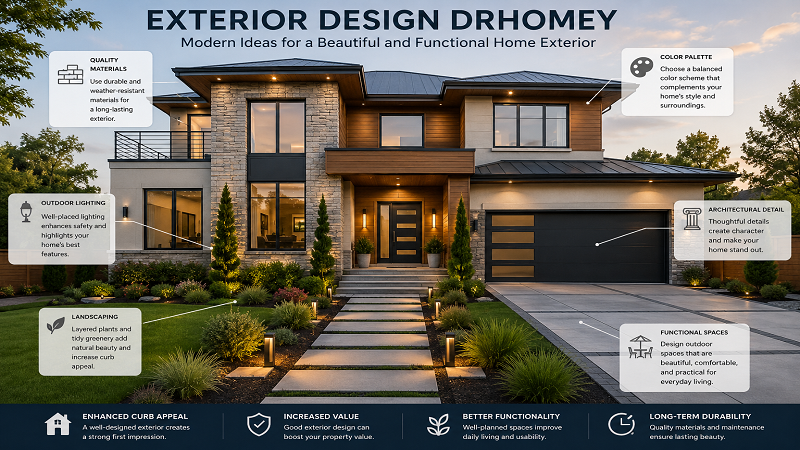
A home’s exterior creates the first impression long before anyone steps inside. Whether you’re planning a complete renovation or making small improvements, thoughtful exterior design can increase curb appeal, improve functionality, and create a welcoming atmosphere.
If you’ve searched for exterior design DrHomey, you’re likely looking for inspiration and practical guidance for designing an attractive home exterior. This guide covers the key principles that can help you make confident design decisions.
Why Exterior Design Matters
Exterior design is more than choosing attractive paint colors.
A well-planned exterior should:
- Complement your home’s architecture.
- Improve outdoor living spaces.
- Increase visual appeal.
- Support long-term durability.
- Require manageable maintenance.
- Blend with the surrounding environment.
Good exterior design balances beauty with practicality.
Start with Your Home’s Architectural Style
Before selecting colors or materials, identify your home’s architectural style.
Common styles include:
| Style | Exterior Features |
|---|---|
| Modern | Clean lines, large windows, neutral colors |
| Contemporary | Mixed materials and bold accents |
| Traditional | Brick, stone, symmetrical layouts |
| Farmhouse | White siding, black trim, natural wood |
| Craftsman | Wide porches, stone columns, exposed beams |
Choosing elements that match your home’s style creates a more cohesive appearance.
Choose Durable Exterior Materials
Materials influence both appearance and maintenance requirements.
Popular options include:
Brick
Brick offers timeless appeal and excellent durability with minimal maintenance.
Natural Stone
Stone creates a premium appearance and works well for accent walls, entryways, and landscaping.
Fiber Cement Siding
Fiber cement provides the appearance of wood while offering improved resistance to weather and pests.
Wood
Wood delivers warmth and natural beauty but requires regular maintenance.
Stucco
Stucco works well in many climates and complements Mediterranean and contemporary homes.
Choose materials based on your local weather conditions, maintenance preferences, and budget.
Select a Balanced Color Palette
Color plays a major role in curb appeal.
A simple formula includes:
- Primary exterior color
- Trim color
- Accent color for doors and shutters
Neutral shades remain popular because they pair well with different landscaping styles.
Bold front doors can create an attractive focal point without overwhelming the design.
Design an Inviting Entrance
Your entryway naturally draws attention.
Consider adding:
- Modern house numbers
- Decorative lighting
- Quality front door hardware
- Seasonal planters
- A clean walkway
- Covered porch seating
Small improvements often create a noticeable impact.
Improve Landscaping
Landscaping connects your home with its surroundings.
Focus on:
Layered Planting
Combine trees, shrubs, flowers, and ground cover for visual depth.
Defined Walkways
Stone or paver pathways improve accessibility while enhancing appearance.
Native Plants
Native plants often require less maintenance and support local ecosystems.
Lawn Care
Keep grass healthy through regular watering, mowing, and seasonal care.
Thoughtful landscaping softens architectural lines and creates balance.
Use Outdoor Lighting Effectively
Lighting improves both safety and appearance.
Popular lighting options include:
- Path lights
- Wall sconces
- Porch lighting
- Landscape spotlights
- Deck lighting
- Motion-sensor security lights
Warm lighting generally creates a comfortable evening atmosphere.
Create Functional Outdoor Living Spaces
Outdoor areas extend your living space.
Ideas include:
Patio
Perfect for dining and entertaining.
Deck
Provides elevated outdoor seating areas.
Pergola
Adds shade and architectural interest.
Fire Pit
Creates a comfortable gathering place during cooler evenings.
Outdoor Kitchen
Suitable for homeowners who frequently entertain guests.
Design these spaces based on how your family uses the outdoors.
Add Texture and Contrast
A visually appealing exterior often combines multiple materials.
Examples include:
- Stone with wood accents
- Brick with black metal fixtures
- White siding with natural timber
- Concrete paired with landscaping
Carefully using contrast creates depth without making the design feel busy.
Don’t Forget Maintenance
Even the best exterior design needs regular care.
Create a maintenance checklist that includes:
- Cleaning gutters
- Washing siding
- Inspecting roofing
- Repainting trim when needed
- Pressure washing walkways
- Pruning trees and shrubs
Preventive maintenance helps preserve your home’s appearance.
Exterior Design Trends
Current design trends include:
- Earth-tone color palettes
- Sustainable materials
- Energy-efficient windows
- Mixed exterior textures
- Black window frames
- Natural wood accents
- Outdoor living spaces
- Low-maintenance landscaping
Choose trends that complement your home rather than following every new style.
Common Exterior Design Mistakes
Avoid these common issues:
- Using too many exterior colors
- Ignoring architectural consistency
- Poor landscape planning
- Choosing materials based only on price
- Installing inadequate outdoor lighting
- Overcrowding decorative features
A simple, balanced design often looks more timeless.
Planning Your Exterior Design Project
Before starting renovations:
- Set a realistic budget.
- Prioritize essential improvements.
- Collect design inspiration.
- Compare material options.
- Consider long-term maintenance.
- Review local building regulations if major changes are planned.
- Work with qualified professionals for structural projects.
A clear plan helps reduce unexpected costs and improves project outcomes.
What is Exterior Design DrHomey?
The phrase appears to refer to exterior home design ideas associated with the DrHomey topic or brand. Public information is limited, so this article focuses on established exterior design best practices rather than unverified claims.
What improves curb appeal the most?
Fresh exterior paint, quality landscaping, updated lighting, a clean entryway, and coordinated materials often make the biggest visual difference.
Which exterior colors stay in style?
Neutral colors such as white, gray, beige, and soft earth tones remain popular because they complement many architectural styles.
What is the most durable exterior material?
Brick, natural stone, and fiber cement siding are widely recognized for their durability when properly installed and maintained.
Should landscaping match the home’s architecture?
Yes. Landscaping should complement the home’s style while considering local climate and maintenance requirements.
Final Thoughts
Exterior Design DrHomey emphasizes creating outdoor spaces that are attractive, practical, and suited to everyday living. By selecting durable materials, using balanced colors, improving landscaping, and maintaining architectural consistency, homeowners can create an exterior that remains appealing for years to come.
Rather than chasing every design trend, focus on choices that suit your home’s style, climate, and long-term maintenance needs. A thoughtful approach will deliver lasting curb appeal and a more enjoyable living environment. More Information