
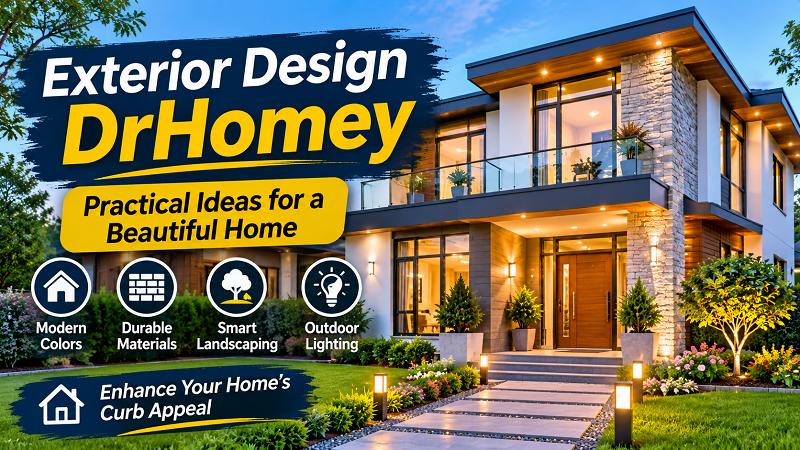
A beautiful home exterior should do more than look impressive in photographs. It should protect the building, welcome visitors, suit the surrounding environment, and remain manageable to maintain. That is the practical thinking behind exterior design DrHomey, a home-improvement topic associated with DrHomey’s exterior design inspiration and guidance.
DrHomey covers ideas related to exterior colors, architectural details, landscaping, lighting, entrances, and outdoor living. Rather than treating these elements as separate decorating decisions, homeowners can approach them as parts of one coordinated design. The result should reflect the home’s existing architecture while meeting the needs of the people who live there.
This guide explains the main principles, shows how to make practical design decisions, and highlights common mistakes to avoid when improving a home’s exterior.
What Is Exterior Design DrHomey?
Exterior design DrHomey refers to home exterior inspiration and improvement guidance associated with DrHomey’s home-design content. It is not a formally recognized architectural style like Victorian, Colonial, Craftsman, or Mid-Century Modern.
The concept is better understood as a practical approach to making outdoor areas attractive, functional, and well maintained.
It brings together several important elements:
- Architecture: Rooflines, walls, windows, doors, and structural proportions.
- Colors: Exterior paint, trim, doors, and complementary finishes.
- Materials: Brick, stone, wood, metal, concrete, and exterior cladding.
- Landscaping: Plants, trees, lawns, garden beds, and pathways.
- Lighting: Entry lights, wall fixtures, garden lights, and pathway illumination.
- Outdoor living: Patios, porches, decks, seating, and usable garden areas.
The important idea is coordination. A new front door may look attractive by itself, but it will have a greater visual impact when its color, hardware, lighting, and surrounding materials complement the rest of the property.
Why Does Your Home’s Exterior Design Matter?
The outside of a property affects its appearance and everyday performance. A well-planned exterior can make a house more welcoming while helping homeowners identify maintenance problems before they become larger concerns.
1. Creates a Welcoming First Impression
The entrance, front elevation, windows, garden, and driveway all contribute to how a home looks from the street.
A clean entrance, coordinated colors, and well-maintained landscaping can make a property appear more organized without requiring a complete renovation.
2. Helps Protect the Building
Exterior design should account for more than appearance.
Roofing, siding, paint, flashing, gutters, and drainage help protect a building from weather exposure. Damaged materials or poorly managed rainwater can lead to moisture problems.
For this reason, repairing vulnerable areas should come before adding decorative features.
3. Makes Outdoor Areas More Useful
A garden can provide more than visual decoration. A suitable seating area, shaded patio, or clearly defined walkway can make outdoor spaces easier to use.
The best arrangement depends on available space, sunlight, privacy, and household needs.
4. Supports Better Long-Term Maintenance
Choosing appropriate materials and finishes can reduce unnecessary upkeep.
However, no exterior material is maintenance-free. Even durable surfaces need periodic inspection, cleaning, and repairs.
Essential Elements of a Beautiful Home Exterior
A cohesive exterior comes from balancing the major parts of the building rather than focusing on one attractive feature.
Architectural Style and Proportions
Start by understanding the existing architecture.
Look at the roof shape, window positions, entrance, wall materials, and overall proportions. These features provide the foundation for any exterior improvement.
For example, a contemporary home may suit simple lines and restrained finishes, while a traditional property may look more appropriate with decorative trim and classic materials.
Avoid adding architectural features simply because they are popular. They should complement the building rather than compete with it.
Exterior Color Combinations
Color is one of the most noticeable parts of a home’s appearance.
A useful starting point is to select:
- One primary color for the largest wall surfaces.
- One secondary color for trim or architectural details.
- One accent color for the entrance or selected features.
For example, a house with warm beige walls could use cream trim and a dark brown entrance door.
A contemporary home might combine light gray walls, charcoal details, and natural wood accents.
Before painting the entire exterior, test sample colors on a small section. Observe them in morning sunlight, afternoon light, and shade because surrounding conditions can change how a color appears.
Also consider the existing roof, stonework, neighboring properties, and local architectural character.
Exterior Materials and Finishes
Materials influence appearance, durability, installation requirements, and maintenance.
| Material | Appearance | Important consideration |
|---|---|---|
| Brick | Traditional and textured | Mortar and moisture conditions |
| Natural stone | Distinctive and substantial | Cost, weight, and installation |
| Wood siding | Warm and natural | Painting, sealing, and moisture protection |
| Fiber cement | Versatile and consistent | Correct installation and edge protection |
| Metal cladding | Clean and contemporary | Finish quality and corrosion protection |
| Exterior render | Smooth and modern | Cracking, drainage, and surface preparation |
There is no single best material for every home.
Consider the local climate, installation quality, maintenance requirements, availability, and total project cost before making a decision.
Front Doors and Windows
Doors and windows have a strong influence on the overall exterior.
A front door can become a focal point through its color, design, hardware, and surrounding frame.
Windows should complement the building’s proportions. Their frames, finishes, and placement should feel consistent with the architectural design.
Do not replace functioning windows simply for appearance without comparing the cost, expected performance, and benefits of repair.
Roofing and Gutters
Roofing occupies a large visual area and plays an important protective role.
Choose a roof finish that works with the wall colors and architectural style. Also consider water resistance, ventilation, drainage, and local weather conditions.
Gutters and downspouts should be included in the design plan rather than treated as afterthoughts.
Their main job is to collect and direct rainwater safely away from the building. Poor drainage can create problems even when the rest of the exterior looks attractive.
Landscaping Ideas That Improve Exterior Design
Landscaping helps connect a building with its surroundings.
A thoughtfully arranged garden can soften hard surfaces, add color, provide shade, and create a more welcoming entrance.
Choose Plants That Suit the Climate
Before purchasing plants, consider:
- Local temperatures and rainfall.
- Soil conditions.
- Available sunlight.
- Water requirements.
- Mature plant size.
- Seasonal maintenance needs.
Native and locally adapted plants can be useful choices because they are suited to regional growing conditions.
Avoid selecting plants based only on how they look in a nursery. A tree that eventually grows too large for its location can create maintenance and property problems.
Create a Balanced Front Garden
A front garden does not need to be complicated.
You can combine a small lawn, defined planting beds, shrubs, and a clear walkway to create a balanced appearance.
Keep taller plants positioned where they will not obstruct windows, entrances, visibility, or access to utility equipment.
Add Functional Walkways
Pathways help visitors reach the entrance comfortably.
Materials such as concrete, natural stone, pavers, and gravel can all work, depending on the design and site conditions.
Pay attention to surface stability, drainage, and slip resistance. A beautiful walkway is not useful if it becomes difficult to walk on during wet weather.
Make Outdoor Spaces Comfortable
A small patio or seating corner can make a garden more practical.
Consider adding suitable outdoor furniture, shade, privacy planting, and lighting.
Keep the arrangement proportional to the available space. Too many decorative features can make a small garden feel crowded.
Exterior Lighting: Combining Safety and Style
Outdoor lighting helps people navigate the property after sunset while highlighting important architectural features.
A practical lighting plan should consider different purposes.
Entrance lighting: Illuminates the main door, lock, and immediate entry area.
Pathway lighting: Helps people see steps, walkways, and changes in ground level.
Wall lighting: Highlights selected exterior surfaces and architectural details.
Garden lighting: Adds visibility around planting areas, seating spaces, and outdoor features.
Choose fixtures designed for outdoor use and appropriate exposure conditions. Follow the manufacturer’s installation instructions and use a qualified electrician where electrical work is required.
Avoid excessive brightness or poorly directed lights that create glare for residents and neighbors.
How to Choose the Right Exterior Design for Your Home
A design that looks excellent on one property may not work on another.
Use these steps to make decisions based on your actual home.
Step 1: Assess the Existing Exterior
Walk around the property and inspect the roof, walls, windows, doors, gutters, driveway, and garden.
Take photographs from different angles. They can help you identify mismatched colors, neglected areas, and features that deserve attention.
Step 2: Identify Problems Before Planning Improvements
Look for peeling paint, damaged roofing, cracks, loose materials, standing water, and blocked drainage.
Separate urgent repairs from cosmetic improvements.
If you notice significant cracks, persistent dampness, or structural movement, seek an appropriate professional inspection.
Step 3: Select a Consistent Design Direction
Decide whether you prefer a modern, traditional, rustic, minimalist, or contemporary appearance.
Use that direction to guide your choices of materials, colors, lighting, and landscaping.
You do not need to follow one style perfectly. A few consistent design features are often enough to create visual harmony.
Step 4: Prepare a Material and Color Plan
Compare available finishes and request samples where possible.
Check how the materials look together under natural light. Also consider how they will age and what maintenance they require.
Step 5: Plan the Landscaping and Lighting
Map out entrances, pathways, planting areas, outdoor seating, and lighting positions.
Make sure these features do not interfere with drainage, building access, or necessary maintenance.
Step 6: Set a Realistic Budget
Divide the project into priorities.
| Priority | Examples |
|---|---|
| Essential repairs | Roof leaks, damaged walls, drainage |
| Main improvements | Painting, cladding, doors, windows |
| Functional upgrades | Pathways, lighting, outdoor seating |
| Decorative finishing | Planters, garden ornaments, accent features |
Obtain written estimates for substantial work and compare the materials, labor, preparation, and warranties included in each quote.
Budget-Friendly Exterior Design DrHomey Ideas
Improving your home’s appearance does not always require a major construction project.
Some relatively simple changes can make a noticeable difference.
Refresh the Front Door
Cleaning, repainting, or updating suitable door hardware can improve the entrance without changing the entire façade.
Choose a finish that works with the existing wall and trim colors.
Improve the Garden
Remove dead plants, trim overgrown shrubs, clear unwanted debris, and define existing garden beds.
A well-maintained garden often looks more appealing than one filled with unnecessary decorative items.
Update Exterior Lighting
Replacing an outdated fixture with a suitable modern outdoor light can improve both appearance and usability.
Check electrical compatibility and weather ratings before purchasing.
Clean Exterior Surfaces
Dirt and stains can make an otherwise attractive property look neglected.
Use cleaning methods appropriate for the surface. High-pressure washing can damage some materials, so follow manufacturer recommendations.
Add Simple Decorative Details
House numbers, suitable planters, matching hardware, and well-maintained entry mats can help create a more organized entrance.
Choose a few complementary details instead of adding too many unrelated decorations.
Common Exterior Design Mistakes to Avoid
Even good materials can produce disappointing results when the overall plan is poorly coordinated.
Here are mistakes worth avoiding.
Choosing Appearance Over Protection
A decorative finish cannot compensate for a leaking roof or damaged exterior wall.
Always address structural and moisture-related problems first.
Using Too Many Colors
Multiple unrelated colors can make a façade look visually crowded.
A controlled palette usually makes it easier to coordinate walls, trim, doors, and other features.
Ignoring Local Weather Conditions
Materials that perform well in one region may deteriorate quickly in another.
Consider heat, humidity, rainfall, wind, sunlight, and temperature changes when choosing products.
Planting Too Close to the Building
Large plants can block ventilation, hide defects, obstruct access, or interfere with drainage.
Check mature plant dimensions and allow sufficient space around the property.
Forgetting Water Management
A beautiful driveway or patio can create drainage problems if it directs water toward the building.
Plan slopes, gutters, downspouts, and suitable surface drainage before completing hardscaping work.
Following Trends Without Considering Architecture
Popular exterior colors and materials are not automatically appropriate for every home.
Choose features that complement the building and will remain practical over time.
Exterior Design and Energy Efficiency
An attractive exterior can also support better building performance when materials and design decisions are made carefully.
Roofing and wall finishes influence how much solar heat a building absorbs. In hot, sunny climates, suitable reflective roofing products may help reduce heat transfer into the home.
However, roof color alone does not determine energy performance. Material properties, insulation, ventilation, building orientation, and local climate also matter.
The U.S. Department of Energy’s Building America Solution Center explains how cool roofs and walls can reduce heat gain and why climate conditions matter when selecting them.
Other practical considerations include:
- Maintaining suitable roof and attic ventilation.
- Sealing appropriate gaps around doors and windows.
- Providing shade where it is useful.
- Selecting suitable glazing and exterior shading.
- Maintaining gutters and directing rainwater away from the structure.
Energy improvements should be evaluated as part of the complete building system rather than chosen solely for visual appeal.
How to Maintain Your Home’s Exterior
Exterior maintenance protects the work you have already invested in.
A simple inspection routine can help identify problems before they become more expensive.
| Area | What to inspect |
|---|---|
| Roof | Damaged, missing, or loose roofing materials |
| Gutters | Blockages, leaks, and loose connections |
| Walls | Cracks, moisture marks, and peeling finishes |
| Windows | Damaged seals, frames, and drainage points |
| Doors | Hardware, weatherstripping, and paint condition |
| Garden | Overgrown plants and drainage issues |
| Walkways | Loose paving, uneven surfaces, and cracks |
| Lighting | Damaged fixtures and electrical problems |
Inspection frequency depends on material, exposure, and local conditions.
After severe weather, check vulnerable areas when it is safe to do so. For repairs involving roofing, electrical systems, or structural concerns, use qualified professionals.
Final Thoughts on Exterior Design DrHomey
A successful home exterior brings together appearance, comfort, protection, and practical maintenance.Exterior design DrHomey provides a useful starting point for thinking about these elements as one coordinated project. From choosing suitable colors and materials to improving landscaping, lighting, and outdoor spaces, every decision should support the character and needs of the property.
Start with the condition of the building, establish a realistic budget, and prioritize improvements that provide lasting practical benefits. Decorative details can come later.
The best exterior is not necessarily the most expensive or complicated one. It is the one that looks appropriate, works well, and remains manageable to care for over time. Click here