
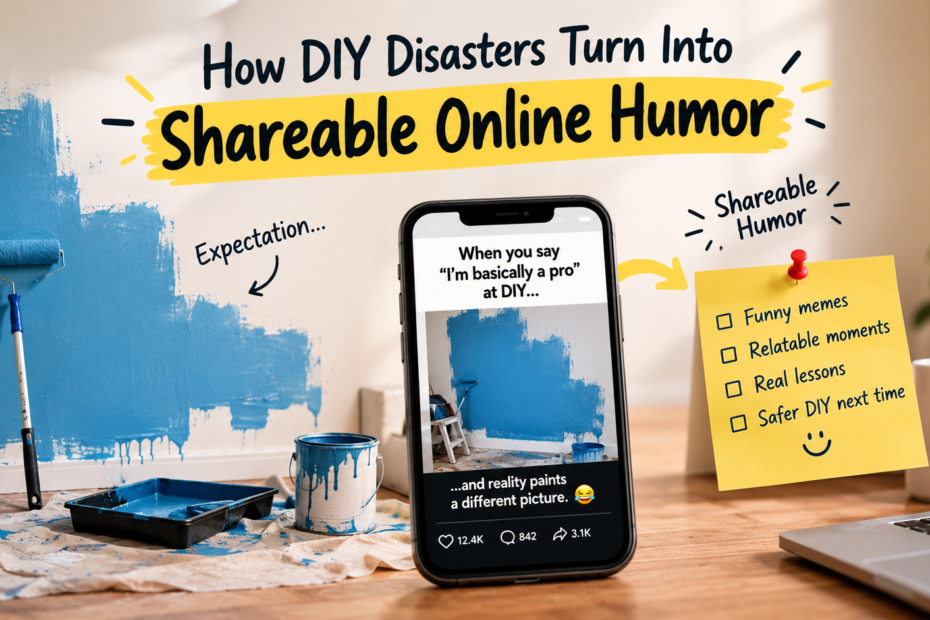
DIY projects rarely unfold exactly as planned. A shelf comes out slightly crooked, a paint color looks nothing like the sample, or a simple repair somehow requires three extra trips to the hardware store. While some mistakes need immediate fixing, harmless DIY failures can also become funny stories that other homeowners instantly understand. With a little creativity and a meme generator, those frustrating moments can turn into relatable online humor while still teaching useful home-improvement lessons.
Why Do DIY Disasters Make Such Relatable Humor?
DIY disasters are funny because the gap between expectation and reality is something almost every homeowner understands. A project may begin with a confident plan, a neat set of tools, and a free Saturday afternoon. A few hours later, the room is covered in dust and the “30-minute job” remains unfinished.
That contrast creates natural comedy. People recognize the confidence that comes before a project and the confusion that sometimes follows. The humor becomes even stronger when the mistake is ordinary rather than extreme. Uneven shelves, spilled paint, incorrect measurements, mysterious leftover screws, and furniture that does not fit through a doorway all work because viewers can imagine themselves making the same mistake.
DIY humor can also make home improvement feel more approachable. Perfect renovation photos are useful for inspiration, but they rarely show the awkward middle stages. Sharing a harmless failure reminds readers that practical skills develop through experience. A mistake can be funny and educational at the same time.
Takeaway: The best DIY humor comes from safe, familiar mistakes that make people think, “I have done that too.”
What Turns a Home-Improvement Mistake Into a Good Meme?
A meme is an image, video, or piece of text that communicates an idea or joke in a format people can quickly understand and share. In DIY content, the strongest memes usually focus on one clear problem rather than trying to explain an entire renovation story.
Key definition: A DIY meme turns a recognizable home-project situation into a short visual joke that makes sense with little explanation.
For example, imagine a photo of a shelf that clearly slopes downward. A long explanation about finding studs, choosing anchors, measuring brackets, and correcting the installation would weaken the joke. A simple caption such as “The spirit level and I have agreed to disagree” communicates the situation immediately.
The same principle works with painting. A picture showing one tiny test patch beside an unexpectedly bright finished wall already contains a visual story. The caption only needs to highlight the difference between the homeowner’s expectations and the final result.
Context still matters. If viewers cannot tell what went wrong, provide one short line explaining it. Good online humor should be quick to understand, especially when someone encounters it while scrolling.
Takeaway: A shareable DIY meme needs a recognizable mistake, a clear image, and a short punchline that adds to what viewers can already see.
How Can You Turn a DIY Fail Into Shareable Online Humor?
The easiest method is to document projects as they happen. Take a few photos before starting, during the work, and after finishing. Even if everything goes well, those images can help you explain the project later. If something harmless goes wrong, you already have the material needed to tell the story.
Then identify the funniest contrast. Ask what you expected and what actually happened. Perhaps you expected a quick faucet replacement but discovered a cabinet full of old plumbing connections. Maybe a “warm neutral” paint looked unexpectedly orange under your room lighting. The contrast provides the joke.
A simple process looks like this:
- Choose a safe failure. Focus on cosmetic errors, planning mistakes, awkward results, or harmless inconveniences.
- Find the clearest photo. Viewers should understand most of the situation without reading a paragraph.
- Identify the expectation. What did you believe would happen?
- Show the reality. Highlight the unexpected result.
- Write a short caption. Keep the joke conversational and easy to understand.
- Add the practical lesson. Explain what you would measure, test, prepare, or research differently next time.
- Protect personal information. Check images for addresses, documents, family photographs, vehicle plates, or other identifying details before posting.
A meme generator can help combine the photograph and caption into a familiar visual format. However, the tool does not create humor for you. The most effective joke still comes from recognizing what makes the experience relatable.
Takeaway: Capture the project, find the expectation-versus-reality moment, make the joke concise, and finish with a lesson readers can use.
Which DIY Failures Are Safe to Joke About?
Not every home-repair problem should become entertainment. There is a meaningful difference between an ugly paint job and exposed electrical wiring. Humor works best when the failure is inconvenient, cosmetic, or easily corrected without putting anyone at risk.
Good subjects can include crooked picture frames, uneven shelves, paint spills, wallpaper pattern mistakes, flat-pack furniture confusion, inaccurate measurements, poor color choices, messy caulk lines, garden-project surprises, or a tool purchased for one oddly specific job.
Problems involving electricity, gas, fire, structural damage, hazardous materials, serious plumbing failures, or personal injury need a different response. Address the danger first and involve a qualified professional when the work exceeds your skills or local requirements. The U.S. Consumer Product Safety Commission provides home safety guidance and consumer safety information that can help homeowners recognize common hazards.
Humor should never encourage viewers to copy unsafe work. A joke about realizing you are out of your depth can be funny. Presenting a dangerous shortcut as a clever DIY trick can mislead inexperienced readers.
Takeaway: Joke about cosmetic mistakes and everyday frustrations, not hazards that could cause injury or serious property damage.
How Can Humor Still Teach a Useful DIY Lesson?
A funny post becomes more valuable when readers leave knowing how to avoid the same problem. The lesson does not need to become a long tutorial. One or two practical sentences are often enough.
Suppose a homeowner cuts a board too short because they measured only once. The joke may focus on the famous “measure twice, cut once” rule. The useful follow-up could explain that marking the waste side of a cut helps reduce errors.
If a paint color looks wrong after covering an entire room, explain that colors can change dramatically with lighting and surrounding materials. Suggest painting a sample area and checking it during different times of day before committing to the full room.
A furniture assembly mistake might lead to a reminder to inventory the hardware and read the complete instructions before tightening every fastener. These small lessons fit naturally beside humor because they explain how the failure happened without turning the post into a lecture.
For more practical homeowner guidance, readers can also browse the DIY and home-improvement tips on DrHomeyHandyTips.com when planning their next project.
Takeaway: Pair the punchline with one practical correction so readers get entertainment and useful home-improvement knowledge from the same story.
What Makes a DIY Meme More Shareable?
Relatability matters more than perfection. Highly polished graphics can work, but an authentic project photo often connects better with a DIY audience because it feels familiar. People share content that reflects experiences they have had or could easily imagine having.
Keep text brief enough to read quickly. Strong captions usually express one idea. Instead of explaining every event leading to the mistake, choose the moment with the strongest emotional contrast.
Useful caption structures include:
- “Me: This should take 20 minutes. The project, four hours later: …”
- “Measure twice, discover a completely different problem once.”
- “The paint sample looked calm and sophisticated.”
- “When the instructions say Step 4, but you somehow built Step 17.”
- “One quick trip to the hardware store, trip number five.”
Avoid forcing trendy phrases into every post. Internet slang changes quickly, while familiar homeowner frustrations remain understandable for years. Clear language also makes a joke easier for a wider audience to understand.
Finally, use photographs or graphics you own or have permission to use. If other people appear in a photo, consider whether they are comfortable being part of the joke before publishing it.
Takeaway: Relatable situations, short captions, original visuals, and simple language make DIY humor easier to understand and share.
Can Before-and-After Photos Make DIY Humor Better?
Yes. Before-and-after images naturally create a story because they show change. In a successful project, the final photo demonstrates improvement. In a funny DIY post, the “after” image can reveal an unexpected result.
There is also room for a third image: the corrected version. Showing the original plan, the mistake, and the final repair creates a complete mini-story. Readers get the joke, see the recovery, and learn that DIY mistakes do not always mean the project is ruined.
This format works especially well for painting, decorating, shelving, furniture restoration, gardening, storage projects, and other visually obvious tasks. It also prevents failure-focused humor from becoming discouraging. The reader sees that a mistake can lead to a solution.
Takeaway: Use “plan, fail, fix” images to turn one project mistake into a funny and useful visual story.
How Should You Handle Comments and Reactions?
Posting a DIY failure invites people to share their own experiences. That can create a useful discussion if you keep the tone constructive. Someone may suggest a better tool, explain an easier method, or admit making exactly the same mistake.
Treat useful corrections as an opportunity to improve the post. If a knowledgeable commenter identifies a genuine safety concern, verify the information and update your content where appropriate. Reliable sources should take priority over a popular comment or viral shortcut.
The National Fire Protection Association, for example, provides electrical safety information for homes, which is more appropriate for safety questions than relying on an anonymous social-media response.
Avoid turning another person’s lack of experience into the joke. Self-directed humor generally works better for DIY content because it stays relatable without embarrassing a contractor, family member, previous homeowner, or beginner who may not have agreed to become part of the post.
Takeaway: Encourage shared experiences, verify technical advice, and keep the joke focused on the situation rather than humiliating another person.
What Should You Check Before Publishing a DIY Meme?
A quick review can prevent a funny post from creating an unintended problem. Before uploading anything, check both the humor and the home-improvement message.
Use this checklist:
- Is the mistake safe to present as humorous?
- Can viewers understand the situation quickly?
- Is the caption short and readable?
- Does the post avoid suggesting a dangerous shortcut?
- Have you added a useful lesson when appropriate?
- Do you own or have permission to use the image?
- Have you removed personal or identifying information?
- Are any technical or safety claims supported by reliable information?
- Is the joke aimed at the situation rather than another person’s expense?
A meme does not need to teach an entire repair process. It simply needs to avoid creating the wrong impression. When a project requires professional expertise, saying so can make the content more responsible without ruining the humor.
Takeaway: Before publishing, check safety, clarity, privacy, image rights, and the accuracy of any DIY advice included with the joke.
Frequently Asked Questions
Can I make memes from my own DIY project photos?
Yes. Original project photos are often ideal because they provide authentic context and avoid many of the copyright concerns associated with copying random images online. Still, check whether other people or private information appear in the image before publishing it.
Takeaway: Your own DIY photos provide authentic meme material, provided you protect privacy and consider anyone else pictured.
Do DIY memes need to include practical advice?
Not every joke requires a tutorial, but a short practical takeaway adds value on a home-improvement website. It can tell readers what caused the mistake and how to avoid it.
Takeaway: Add a brief lesson when it helps readers prevent the same DIY mistake.
What types of DIY mistakes should not become jokes?
Avoid treating injuries, electrical hazards, gas problems, structural failures, fires, dangerous tools, or exposure to hazardous materials as harmless entertainment. Resolve safety issues before thinking about content.
Takeaway: Serious safety hazards require action and reliable guidance, not a casual DIY punchline.
How much text should a DIY meme contain?
Use only enough text to establish the joke. If the image already explains the failure, one short caption may be sufficient. Put longer context or practical advice in the accompanying article or post.
Takeaway: Keep meme text short and place detailed explanations outside the image.
Why are expectation-versus-reality DIY memes effective?
They show a familiar gap between what someone planned and what actually happened. That contrast is easy to understand and gives other DIYers a reason to relate, laugh, and share their own experiences.
Takeaway: Expectation-versus-reality humor works because DIY projects often produce recognizable surprises.
How Can a DIY Disaster Become Something Useful?
A failed home project does not have to end with frustration. If the mistake is harmless, documenting it can turn an awkward afternoon into a useful story for other DIYers. A good meme captures the funny part quickly, while the surrounding content explains what went wrong and what could work better next time.
The goal is not to celebrate poor workmanship. It is to show the realistic side of maintaining and improving a home. DIY skills grow through planning, practice, corrections, and occasional mistakes. When homeowners share those moments responsibly, humor can make practical knowledge more memorable and home improvement feel a little less intimidating.
Takeaway: The strongest DIY humor turns a safe mistake into three things: a relatable laugh, a practical lesson, and a reminder that better DIY skills often come from learning what did not work.